
How to Prepare Your Home for Future EV Charging
As more drivers switch to electric vehicles, getting your home ready for efficient, accessible charging isn’t just a luxury—it’s quickly becoming a necessity. Whether you drive a plug-in hybrid or a fully electric car, installing the right charging infrastructure can streamline your day-to-day routine, enhance your property’s resale value, and contribute to a greener future. For residents seeking reliable solutions, Lakeland EV charger installation experts can make the transition to home EV charging seamless and hassle-free.
Preparation requires understanding your home’s electrical capabilities, choosing the right equipment, and considering long-term sustainability. It goes beyond simply plugging your car into a wall outlet. Smart planning today can save you money, eliminate installation headaches, and help future-proof your home as EV technology rapidly evolves.
Additionally, the ideal setup isn’t simply about convenience. Proper EV readiness reduces your environmental impact. It also enables you to take advantage of financial incentives offered by government and utility programs. For homeowners looking to maximize efficiency and charging reliability, exploring home EV charging options is an essential step toward electrified mobility.
Contents
- 1 Assess Your Home’s Electrical Capacity
- 2 Choose the Right EV Charger Type
- 3 Select an Optimal Installation Location of EV Charging
- 4 Hire a Qualified Electrician for EV Charging
- 5 Integrate Renewable Energy Sources
- 6 Explore Incentives and Rebates of EV Charging
- 7 Future-Proof Your Charging Setup
- 8 Conclusion
Assess Your Home’s Electrical Capacity
The first step in preparing for home EV charging is to evaluate your existing electrical infrastructure. Most EV chargers require significant power, typically drawing between 16 and 80 amps. This means many older homes, especially those with a 100-amp service panel, may be unable to meet the demand without upgrades. A professional assessment can help determine whether your current panel is sufficient for charging. It can also confirm if a more robust system is required for safe, reliable operation.
Choose the Right EV Charger Type
EV chargers primarily come in two varieties, each suited to different needs:
- Level 1 Chargers: These connect to a standard 120-volt outlet and provide a slow charging rate—typically 2–5 miles of range per hour. They’re most appropriate for plug-in hybrid vehicle owners or EV owners with minimal daily driving.
- Level 2 Chargers: These operate on a 240-volt outlet and offer much faster charging (10–20 miles per hour), making them ideal for fully electric vehicles or households with higher mileage demands.
The right choice depends on your vehicle type, typical commute, and charging patterns. Many homeowners find Level 2 chargers to be the optimal balance between speed and long-term practicality.
Select an Optimal Installation Location of EV Charging
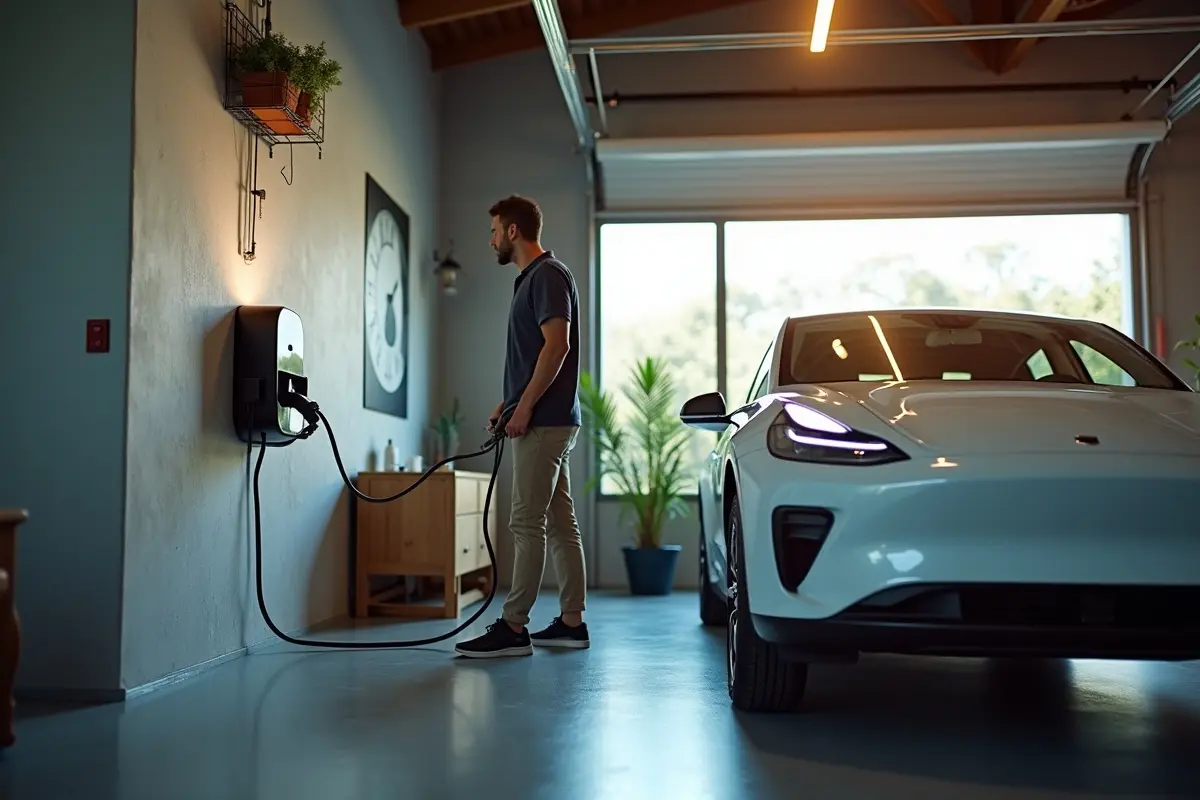
Careful placement of your EV charger maximizes convenience and safety. Position the charging station near your primary parking spot so the cable can reach your car easily. For outdoor installations, the equipment must be weatherproof and accessible. The charger should be mounted at a height between 18 and 48 inches from the ground to comply with safety standards.
Hire a Qualified Electrician for EV Charging
Professional installation is vital to guarantee safe operation, system longevity, and code compliance. An experienced, licensed electrician will:
- Perform an electrical load calculation to confirm your system’s capacity for an EV charger.
- Upgrade your service panel if required.
- Secure required permits and schedule official inspections to ensure compliance with local regulations.
- Install the charger with proper wiring and protective devices to protect your home from electrical faults.
Integrate Renewable Energy Sources
Many EV owners choose to pair home charging systems with solar panels or other renewable energy sources, further reducing utility bills and their environmental footprint. A solar-ready system can let you generate on-site clean energy, store excess power in a battery, and use it for home operations and vehicle charging, if compatible. This approach delivers true energy independence and maximizes the ecological benefits of your EV investment.
Explore Incentives and Rebates of EV Charging
Incentives can significantly offset the costs of installing EV chargers. Homeowners may qualify for a federal tax credit of up to 30% of the installation cost. This credit is currently capped at $1,000 for residential customers, subject to eligibility and local requirements. Various state and utility programs can further sweeten the deal. These programs offer rebates, discounts, and additional savings when you upgrade your home’s charging capacity.
Future-Proof Your Charging Setup
EV technology is advancing rapidly, so forward-thinking homeowners should consider flexible, scalable solutions when upgrading their systems. Look for chargers that are compatible with upcoming features. These features include Vehicle-to-Grid (V2G) technology, bi-directional charging, and support for an expanding range of EV connectors.
Select models with smart features like Wi-Fi connectivity, scheduling, and usage tracking. These features maximize convenience and future adaptability. Additionally, opt for devices that accept emerging payment and access systems. This provides broader utility, especially if home charging will be shared by multiple vehicles or users.
Conclusion
Preparing your home for future EV charging is an investment in convenience, sustainability, and property value. By carefully assessing your electrical system and choosing the appropriate equipment, you can create a seamless charging experience tailored to your needs. This requires staying informed about incentives and new technologies. Thoughtful planning now ensures your home stays ahead of the curve as EV adoption accelerates. This allows you to enjoy the benefits of clean, electric mobility for years to come.